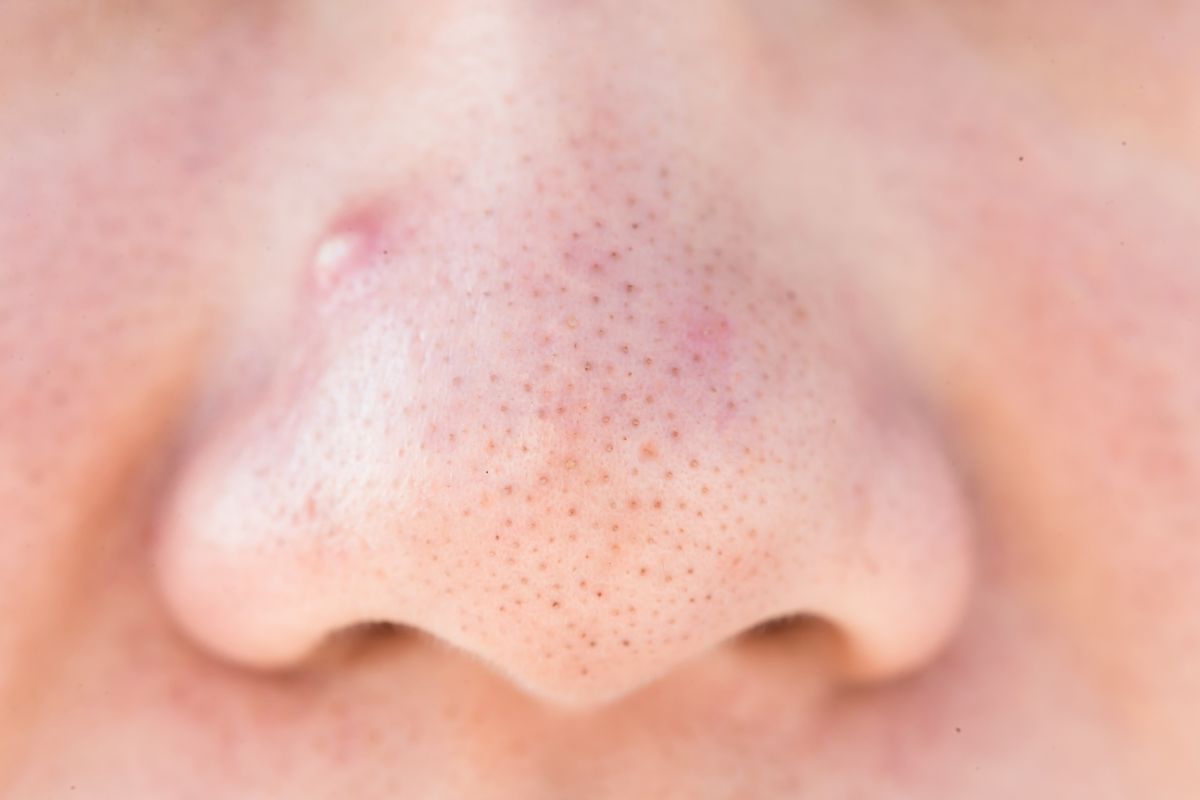
Suffering from a pimple inside the nose can be surprisingly painful and irritating. This article explores the causes, preventive measures, and effective treatments to address this common issue.
Pimples in your nose can range from mild annoyances to serious health conditions, so if you detect one it is wise to see your doctor immediately for diagnosis and treatment.
Picking, scratching or trying to pop a nose pimple can lead to infection that will spread rapidly – creating cellulitis which is hard to treat with antibiotics.
Table of Contents
Causes
Acne can spread through to your nose too! The same bacteria responsible for acne on your face can infiltrate it and form pimples or boils known as furuncles that appear inside or near hair follicles in either nostril, often just inside nostrils or on bridge. These minor infections, known as nasal vestibulitis, usually caused by Staphylococcus bacteria can often result from excessive nose blowing or picking at nostrils resulting from overdoing it with blowing, with crusts sometimes formed sloughing from skin sloughing which Mupirocin can treat effectively.
Poor hygiene or chronic autoimmune diseases like systemic lupus erythematosus (lupus) increase your likelihood of pimples forming inside of the nose. Lupus causes immune cells to mistakenly attack healthy tissues instead, leading to pain and swelling throughout the body.
Pimples on the nose may also be due to clogged pores caused by excess oil or dead skin cells. Clogged pores can lead to painful blemishes that form painful scabs on the nose that recur often; more serious consequences include an infection of cavernous sinus thrombosis whereby pus-filled cysts or boils form in large veins at the base of skull, eventually spreading infection directly into brain.
An outbreak of pimples on the bridge of your nose may be an indicator that you are suffering from herpes simplex virus, in which case seeing a dermatologist may prescribe an antiviral medication to avoid an outbreak.
At first, it is crucial not to touch or pick at the blemish. Picking can aggravate inflammation, pain and infection; break blemishes open and release bacteria or germs into your system; this could then cause scarring to form later. Instead, consider using over-the-counter spot treatments for acne or warm compresses three times daily on your nose in order to reduce inflammation and swelling or take an ibuprofen or acetaminophen pain reliever to alleviate discomfort.
Symptoms
As with any blemish, pimples inside of your nose may cause redness, swelling, pain, blackheads or whiteheads and mucus production. Unfortunately, their location makes treatment challenging – if they persist you should see a dermatologist so they can evaluate them and determine whether they may be due to infection or another issue.
Pimples near the sinuses may develop into cellulitis infections that spread to other parts of the face and body, or lead to nasal abscesses that require drainage or oral antibiotics – in rare instances even travelling through veins into the brain, according to Merck Manuals.
Cold sores often appear near the mouth, lips and nose area and may resemble pimples; however, picking or popping any pimples found here could exacerbate existing blemishes and lead to serious infection like herpes simplex virus or bacteria infection, according to Dr. Evans.
Nose vestibulitis folliculitis infections, which affect the tiny hair follicles within your nostrils, are another blemish that may surface in this region of the face. They’re susceptible to staphylococcus (staph) bacteria and can cause by habits such as regularly blowing or picking your nose and having a nasal piercing; moreover, these conditions tend to occur more frequently among individuals with compromised immune systems or diabetes.
Pimples caused by staph infections can diagnose through physical examination and nasal fluid sampling. Treatment options are similar to acne treatment options; however, your doctor may also prescribe antibiotics. If the blemishes aren’t caused by infection, over-the-counter antibacterial ointments and warm compresses may help ease symptoms; otherwise seek medical advice as soon as possible in order to avoid severe discomfort that could potentially result in permanent damage to the nasal septum.
Treatment
Pimples can appear anywhere on the body, including hard-to-reach areas of the nose. While some blemishes will clear on their own with at-home care alone, others require medical treatment that may include anything from simple treatments up to more intensive procedures.
Pimples form when bacteria becomes trapped inside a clogged pore containing hair follicles and oil glands in the skin, often when cells that produce oil and hair break down more quickly than they can be replaced. When such pores open up again, bacteria enters, becoming infected and creating red or black bumps on their surfaces.
When it comes to nose pimples, it’s essential not to pick at them or attempt to pop them as this can spread bacteria and lead to further infections. Instead, mild soap and warm water with clean cloth or tissue wipe-down is recommended, followed by taking an over-the-counter pain reliever such as ibuprofen or aspirin to ease discomfort caused by nasal pimples.
Nasal vestibulitis, the condition that often results in pimples forming inside the nose, is most prevalent among people who frequently pluck or use nose piercings; it may also affect those living with diabetes or compromised immune systems; more seriously it could indicate systemic lupus erythematosus (lupus).
Narrow treatments exist for nasal vestibulitis, including over-the-counter antibiotic ointments like Bacitracin or Mupirocin and antiviral medications like Valacyclovir or Acyclovir. If symptoms worsen significantly, doctors may perform physical exams and order imaging studies such as an MRI or CT scan of the head to look for signs of infection within sinuses or other issues; blood or fluid samples may collected to test for any bacteria infection and identify what kind of bacteria infection exists.
Prevention
Pimples inside of the nose typically arise when hair follicles irritated and inflamed due to oil build-up, dead skin cells or bacteria clogging their follicles, ingrown hairs growing back into pores, improper shaving techniques or waxing causing ingrown hairs or plucking, ingrowns cut incorrectly resulting in bumpy bumps underneath the pores, and/or improper shaving or waxing procedures; additionally this area may also susceptible to bacterial infections like folliculitis or nasal vestibulitis affecting its inhabitants as well.
An inflamed or rapidly expanding pimple could be an indicator of infection or tumor in your nose, and should always be examined by a healthcare provider as soon as possible. They can perform physical exams of the area as well as conduct imaging tests such as an MRI or CT scan of the sinuses; infections can often treat using antibiotic ointments like Bacitracin or Mupirocin; tumors may require surgical removal depending on their location and size.
Prevention of pimples inside the nose may not be as easy as other forms of acne, but there are still steps you can take to decrease their chance. Avoid squeezing or picking at any area where pimples appear as this can spread bacteria further and result in more serious infection according to dermatologists.
Utilize a nasal moisturizer or humidifier to keep the area moist and minimize irritation and inflammation, as this may also help prevent irritation and inflammation. Furthermore, be sure to wash your hands frequently when handling nose-related areas, and change pillow cases regularly in order to eliminate bacteria build-up.
Pimples on the nose may not be as prevalent as on other areas of the face, such as forehead, cheeks or chin; however, they do occur and usually result from blocked pores, ingrown hairs or an infection such as folliculitis or nasal vestibulitis. A physician can treat such pimples using antibacterial ointments or antibiotics while draining pus or tumors may require if necessary.