Rhinophyma is an extreme skin condition affecting the nose and its surrounding tissues, often manifesting itself with reddened, thickened and bulbous nose. Furthermore, it may block airways.
Rosacea may be responsible. Treatment options available to alleviate its symptoms may include medications, topical prescriptions or surgery.
Table of Contents
Medications
Medication can help treat rhinophyma symptoms and enhance its appearance by relieving redness, inflammation, and sebaceous overgrowth associated with this condition. Topical prescription creams or oral medications may initially help relieve redness, inflammation, and sebaceous overgrowth associated with rhinophyma. Depending on its severity, surgery may also be required to reshape and remove excess skin; carbon dioxide laser ablation and pulsed dye laser ablation may also be effective means.
Rhinophyma is often misattributed to alcohol consumption, leading to historical nicknames like “whisky nose” or “alcoholic nose.” While untreated severe rosacea can trigger this condition, it also manifests in people without this medical condition, with no connection whatsoever between their alcohol intake and rhinophyma.
If you notice new or worsening symptoms such as increased redness or thickening of the skin, visit a dermatologist immediately for treatment. By seeking early attention for any conditions that arise early, the less likely they will become severe and difficult to treat in future.
Oral medications can be an effective tool in managing rhinophyma symptoms such as redness, inflammation and sebaceous tissue overgrowth as well as enlarged pores and bumpy skin texture. Low-dose isotretinoin (which is commonly prescribed to those suffering from acne) is one such drug which has proven helpful. It reduces redness while slowing glandular development leading to enlarge pores and bumpy skin texture.
Laser therapy can help shrink enlarged blood vessels, while surgical procedures are used to remove extra or droopy skin and reshape your nose. Both procedures typically take between 30-45 minutes for completion under local anesthesia.
As your nose is such a prominent feature of your face, its condition can have a major impact on its aesthetics and therefore on how people view themselves. Severe rhinophyma can lead to thick skin overgrowing its framework of cartilage cartilage in such a way as to cause problems breathing as well as distress for patients. For more serious cases GP referral to specialists who utilize laser and scalpel excision techniques may be beneficial.
Topical Prescriptions for Rhinophyma
Rhinophyma is an extremely rare skin condition which causes the nose to become red, bumpy and bulbous, often due to an untreated severe facial rosacea condition. Experts believe it stems from abnormal oil gland proliferation on the face; people affected may also suffer other skin ailments including dilated blood vessels, skin pitting scarring and diffuse spider veins as well as difficulty breathing through their nose due to thickened skin blocking it off completely.
An effective treatment regimen includes both oral and topical medications as well as lifestyle adjustments to minimize the effects of this condition. Oral antibiotics are often recommended to help decrease flushing and inflammation associated with this disorder; taking these on time as directed for best results. Topical creams or gels such as Tretinoin, Azelaic Acid or other prescription-grade products are also available that can be applied directly onto affected areas in order to reduce redness, puffiness or blotchiness – such as Tretinoin or Azelaic Acid treatments.
As alcohol and caffeine may worsen symptoms, patients should also ensure they use sun protection when going outside, as well as being aware of their skin sensitivity. If symptoms continue to worsen it is advised that patients visit a healthcare professional for diagnosis and treatment options.
Rhinophyma can be an emotionally and psychologically distressful condition to have. Not only is it cosmetically embarrassing, but its consequences can have lasting psychological repercussions too – bullies often target those living with this condition and they may find it more challenging finding employment or dates than people without this condition. Therefore it is crucial to focus on positive outlook and surround yourself with supportive people during this difficult journey.
Cosmetic surgery for this condition can offer long-lasting solutions with low recurrence rates. Our team of skilled surgeons are more than willing to discuss all of the procedures we offer and can assist in finding a plan tailored specifically to meet your needs.
Nose Reshaping Surgery for Rhinophyma
Rhinophyma is an increasingly prevalent medical condition that should be addressed quickly and effectively. A progressive skin disorder, it most frequently impacts the nose but it may affect other parts of the face as well. Early symptoms of Rhinophyma include bumpy reddish skin with overproduction of oil glands leading to unsightly bumpy bumps accompanied by thickened tissue or scarring and often enlarged pores or thickened tissue formation. Rhinophyma can impede breathing due to obstruction in nasal passages or lung tissue obstruction so treatment typically includes medication or surgery for relief of symptoms.
Surgery for this condition focuses on surgically extracting any overgrown tissue using various devices, including electrosurgical tools that cut, cauterise and shave it with blades; these lack the precision and refinement of carbon dioxide and Erbium YAG lasers which can effectively target diseased areas while leaving healthy skin looking healthier while improving airflow.
Once the damaged skin is gone, a surgeon may apply medical ointment to help keep remaining healthy skin from drying out and aid with healing. He or she may also place a splint or dressing to shape and support it while it heals; patients must adhere to any instructions for care provided by their physician and schedule regular check-ins with them.
Results of nose surgery can be dramatic, providing dramatic improvement to its look and feel. Typically performed under local anesthesia in an office environment, recovery is relatively fast after this surgery has taken place. Reshaping may improve breathing by reducing thickness of nasal walls – many patients report improved self-image and confidence after treatment has taken place. For optimal results it is wise to consult a plastic surgeon experienced in treating this condition so you receive optimal care from them.
Laser Treatment
Rhinophyma can be extremely challenging to treat. Though topical treatments have proven helpful in alleviating symptoms, they cannot reverse cosmetic deformity that often comes with it. When necessary, surgery is required in severe cases to dramatically improve the appearance of the nose – previously this was accomplished via sharp excision, dermabrasion and loop diathermy (to de-bulk). Recently however, carbon dioxide laser surgery has proven more efficient at carrying out these tasks than previous methods by offering precise tissue vaporization which prevents violation of surrounding normal tissues while speedy reepithelialization process with reduced bleeding than older hot knife techniques.
Results of laser treatments can often be dramatic; however, it’s important to remember that they may not always appear immediately; rather they will improve over time and may temporarily cause the nose to appear reddened and slightly swollen before dissipating in time.
If you are considering laser treatment to treat rhinophyma, we advise seeking out an experienced dermatologist with all of the required skills and equipment for performing these procedures. As there are very few clinics offering this treatment in the UK, your research must be thorough to find one suitable clinic.
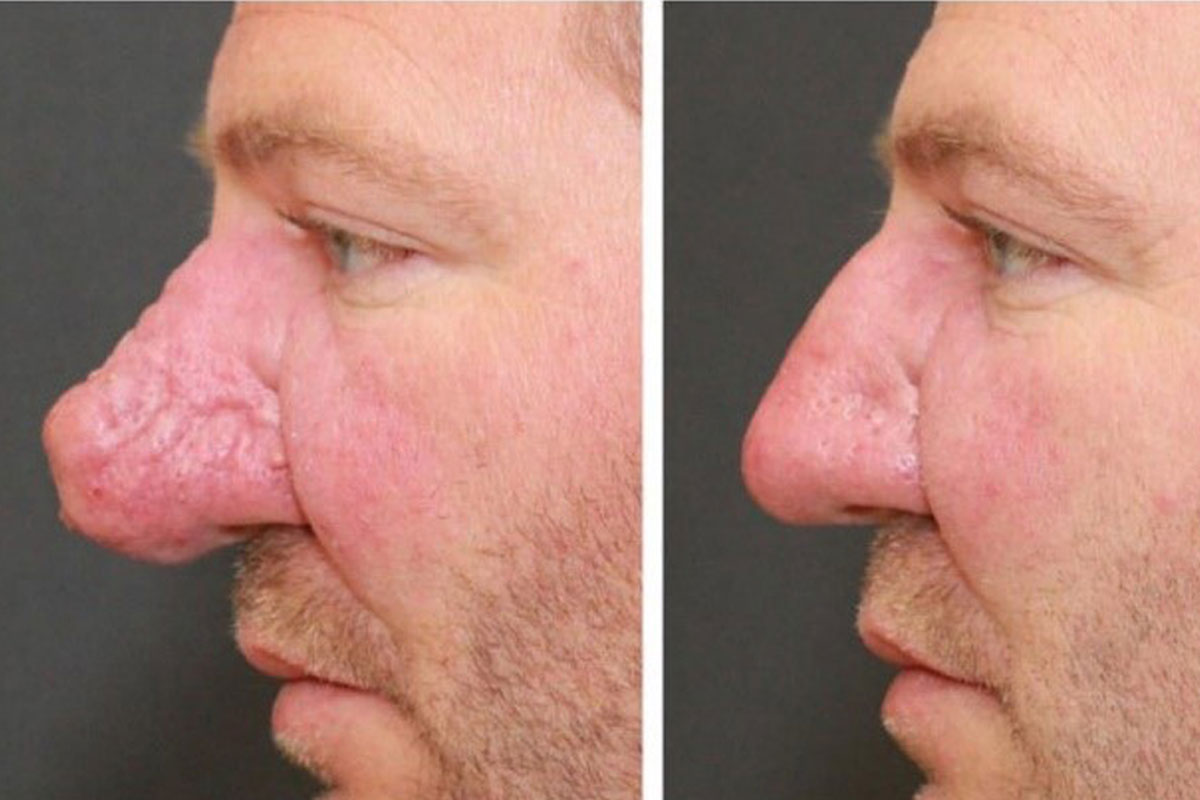
As seen in the photo of this patient, his nose has become much more symmetrical and natural after receiving laser treatment to eliminate excess tissue. Furthermore, his nasal breathing has significantly improved due to de-bulking heavy, weighted soft tissue which was pressing down on his nostrils.
Rhinophyma may be linked to rosacea, but this condition can also occur without it. While its exact cause remains unclear, current evidence points toward it being an untreated form of rosacea that worsens over time and goes untreated. Early evaluation and treatment is vital to avoid more advanced cases from developing. Rhinophyma can be difficult to treat successfully but with proper strategies in place most cases can be successfully managed.