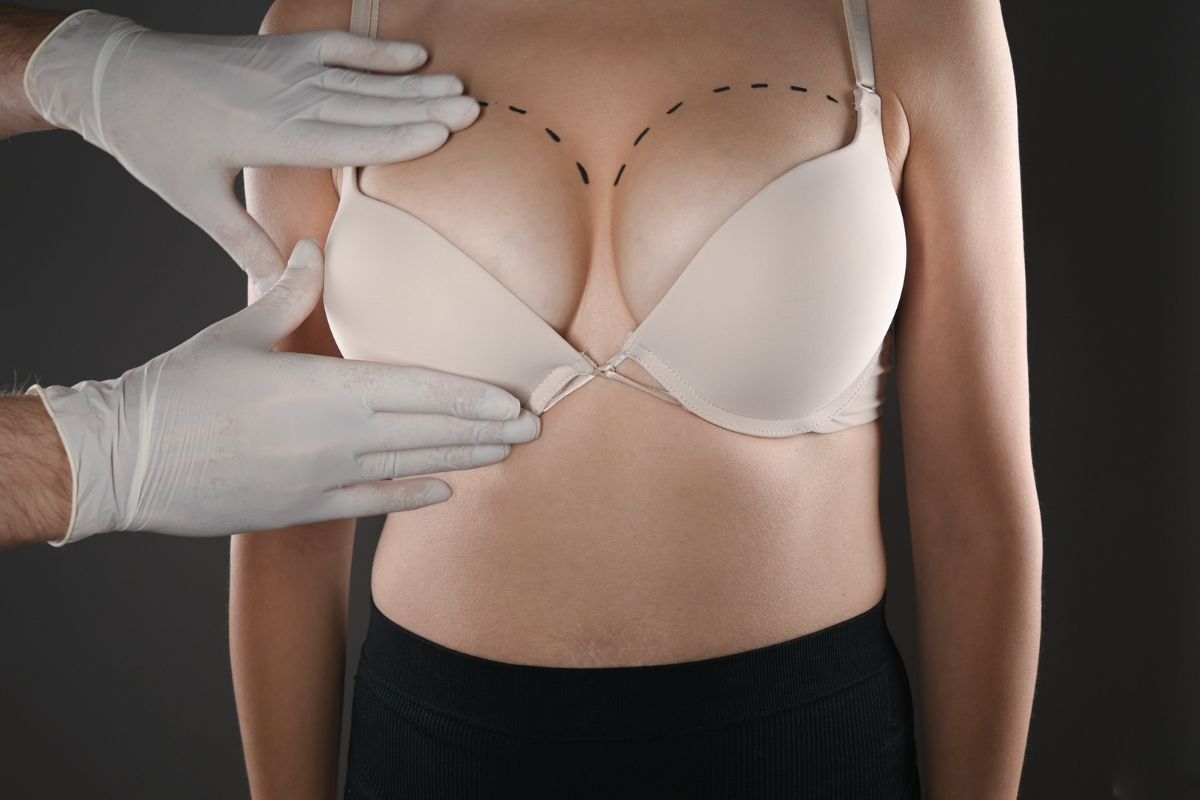
Breast augmentation is a surgical procedure that enlarges breasts by placing either saline or silicone implants in front of or behind the chest muscle. It is commonly performed under general anesthesia.
Your surgeon will separate your breast tissue to create a pocket for the implant. They will then insert your implant centered in the nipple area.
Table of Contents
Subglandular
Breast implants can be inserted under the chest muscle (subglandular) or behind the muscle but above the breast tissue (submuscular). Both techniques have their advantages and disadvantages. Subglandular placement tends to result in a more natural-looking appearance, particularly for women with sufficient breast tissue. However, this type of implant placement can also lead to visible rippling and may slightly interfere with mammogram results. Furthermore, subglandular breast augmentation requires more surgical manipulation and can be associated with longer recovery times.
When patients choose subglandular implant placement, their surgeon will create a pocket above the muscle layer, using anatomic landmarks to mark its borders. Once the pocket has been created, the implant will be inserted into it. This method is less invasive than submuscular implant placement, which involves more tissue dissection and manipulation. Therefore, it is generally associated with a shorter and more comfortable recovery period. Moreover, the subglandular technique allows the surgeon to enter the muscle through different locations, making it easier for them to manipulate and remove scar tissue from the area in the future.
Subglandular implant placement is also recommended for women who have thin breast tissue or sagging in their breasts. This is because it helps the breast tissue to cover and conceal the edges of the implant, resulting in a more natural-looking appearance. In addition, this technique can also help patients who have lost a large amount of weight to restore their breasts’ shape and size, and it may even allow them to delay having a lift procedure in the future.
Women who choose subglandular breast augmentation are usually advised to use silicone gel instead of saline implants, since they tend to look and feel more natural. Although the subglandular placement is less invasive, it can still be vulnerable to complications such as capsular contracture, which causes the scar tissue surrounding the implant to become thick and hard. In such cases, Dr. Marin might have to perform a second surgery to remove the excess scar tissue.
Submuscular
As the name suggests, this implant placement method involves placing your implants underneath your pectoralis chest muscle. This method provides a more natural result than over-the-muscle placement, with a lower risk of capsular contracture. It’s also considered better for thin women with little breast tissue, and it can provide greater coverage of the implant for a smoother shape. However, if you choose to have your implants placed under the muscle, it may take longer for the final results to become visible.
During this procedure, surgeons use an incision in the armpit or axilla to insert the implant under the muscle. They might also use a tiny fiber-optic camera to guide them. This technique is called trans-axillary augmentation, and it can save on recovery time since there’s no scarring on the breast itself. However, the implant can shift or move over time, resulting in an unnatural appearance. In addition, muscular flexing can cause the implant to appear distorted. This makes the submuscular implant positioning option less ideal for women who lift weights or practice bodybuilding.
The location of your implant will determine its final shape and projection. Over-the-muscle implants tend to have a more rounded and unnatural profile, while under-the-muscle (or dual plane) implants offer a more proportional and balanced contour. Your surgeon will evaluate several factors and collaborate with you to choose the best site for your implants based on your desired results and your amount of existing breast tissue.
When new implants are initially placed, they’ll appear firm and sit higher on the chest due to the tightness of your chest muscle. This is a normal reaction, and it will gradually relax over the course of several months as your breasts undergo a process known as “dropping and fluffing.” As this occurs, the implant will sink and fill out beneath your chest muscle for a more natural appearance.
One of the biggest advantages of under-the-muscle placement is a lower rate of capsular contracture, which is the formation of a capsule of scar tissue around the implant that can make it hard and misshapen. In addition, rippling is less of an issue with this type of implant placement, and mammograms are easier to read.
Transumbilical
TUBA, also known as the “belly button” breast augmentation procedure, is a relatively new technique for placing breast implants. This surgical technique is often regarded as less painful than traditional implant procedures, and it can provide more natural-looking results.
However, the TUBA method is not without its disadvantages. The main drawback is that the surgeon is unable to visualize the implant pocket as he works, because he must rely on feel alone. In addition, the TUBA incision cannot be reopened for revision surgery later on, which can be an issue for women with thin torsos.
Fortunately, recent technical advancements have enabled a broader range of patients to enjoy the benefits of the TUBA procedure. For example, this method can be used to perform subpectoral augmentation (implant placement under the pectoralis muscle). This type of augmentation provides a more natural appearance than a subglandular procedure, and it may also reduce long-term complications such as damage to the muscle and skin tissue.
The TUBA procedure begins with an incision at the navel, where Dr. Sajan inserts an endoscope to guide him as he creates a tunnel underneath the fat layer for instrumentation. This tunnel then travels from the belly button to an area behind the breast, where the implant is placed. Once the implant is in place, saline is injected into it through a tube until the desired volume is reached.
Because the TUBA technique does not involve abdominal muscles, it is less painful than other breast augmentation methods. Additionally, it allows for a quicker recovery and reduces the chance of a hernia.
Although some swelling is to be expected at the site of the tunnel, this is usually temporary and should subside as the tissues heal. Lastly, the TUBA approach does not cause a loss of nipple sensation because it does not cut through or injure the nipple. Moreover, it does not interfere with the nipple’s ability to contract and expand, so it is unlikely to compromise the function of saline implants. This fact should dispel many myths about the TUBA technique.
Transverse
The breast augmentation procedure rebuilds the breast’s shape with either artificial implants or autologous tissue from the abdomen, back or buttocks. Depending on the type of mastectomy, it may also involve other reconstructive procedures, such as reduction mammoplasty and surgery on the unaffected breast for symmetry. The goal is to restore a woman’s appearance and reduce her risk of breast cancer recurrence or other health problems that can occur after mastectomy due to hormonal changes or radiation treatment.
The most common method of achieving this is the subglandular implant placement technique. Often called over the muscle, it allows for more coverage of the breast area and a more rounded look. It is best suited for women with a large amount of natural breast tissue, such as those with a B cup or higher. It is also beneficial for women with sagging or ptosis, which can result from having children, losing weight or the natural aging process.
Another technique is the dual-plane implant placement. This is ideal for women with a low-grade breast droop (ptosis), and it can also be used to treat tuberous breasts, which are misshapen from a congenital abnormality. This method is also more likely to prevent capsular contracture, which can occur when the nipple and the implant are unable to separate.
For this procedure, the implant is placed underneath the pectoralis muscle but above the breast tissue. The implant is then attached to the skin using an anchoring device or a surgical suture. This method is preferred by many surgeons because it offers a more natural-looking and symmetrical result. It also allows for easier mammogram readings and a more realistic breast shape.
A recent meta-analysis of studies on innervation of breast reconstruction showed that patients who have their implants innervated experience better clinical and psychosocial outcomes. However, the authors pointed out that there is a lack of long-term data regarding these outcomes and a need for further research on this topic.
In a similar study, UpToDate found that the use of a latissimus dorsi myocutaneous flap together with an implant reduced capsular contracture rates. These rates were 3.6 % at the mean follow-up of just over 2 years.
Recommended readings:
- Medical Spa Treatments for Post-Surgery Healing
CoolSculpting Vs Other Fat Reduction Methods
How to Get Rid of Cellulite